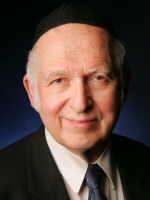
Rabbi Aharon Lichtenstein lecture at the 'Yeshiva University', Jerusalem Preliminary Remarks
Two preliminary remarks:
1. Regarding the topic in general, though it may seem strange/esoteric, but I think its important things can be said about the topic. I will stress that I will not pretend to give a comprehensive presentation, from historical or theological sense. Despite the lack of comprehensive sweep, I think the shiur can benefit the audience and myself.
2. This will be a presentation of the meaning of joy. We have an understanding of its importance already, but I am not talking about celebration, but emotional/spiritual gratification, different from what some of us think is a joyous celebration and it is not in the sense of enjoyment, Elizabethan or modern.
CS Lewiss book, Solace and Joy, comes from a longer quote, ___________. This, I leave for this evening to the back burner.
Presentations of Sad Teshuva
Rambam Teshuva 2:4- midarkei hateshuva lihyos tzoek tamid lifnei H bibechi uvetachanunim ulihirachek min hamaasekmeshane shmo ani achermeshane maasav lihyos anav ushfal ruach. Rokeach (12 thcentury) has in Hilchos Teshuva a tefillah he has for someone who wants to do teshuva properly: One should cry out to H a lot with wellsprings of tears, out of utter sadness, and say that each part of him which has been decomposed by teshuva, that this should be a part of an offering on the mizbeach. The spirit of the piece, also quoted by Sefer Chasidim has to do with great mourning and sadness. R Yonah 1:12 in Shaarei Teshuva early in the sefer, lists some of the primary components/principles of teshuva. The third is having a sense of mourning, yagon, that it is terrible that he countermanded the orders of his Creator, and he should gasp with bitterness. 1:13- The different levels of teshuva are a function of the extent of bitterness and intensity of yagon. These citations, which are representative of Sefard in the Rambam, a representative of Chasidei Ashkenaz, ascetic, R Yonah, a century after the Rambam, a Sefardi but not a normal one. These all illustrate that one should be unhappy, and that joy is not a real part of tshuva. The same might be said in a perek of Tehillim, perhaps the best known in Tanach in the realm of Teshuva. 51- bivo elav natan hanavi chasdechaavonai kabesenilicha levadcha chatasi haster panecha meavonosai the sense and presence of sin confronted is dominant. Here, too, both in the statement about the primacy of sin (and its antedating the human spirit), and dealing with its pervasiveness, joy hardly seems to be the order of the day. In this respect, the perek in Tehillim confirms our own intuitions about the place of joy within teshuva. If we were to think of what the component of teshuva were, there are many we identify with the process.
Aspects of Sin
There are metaphors used to describe sin:
1. it is often referred to as a spiritual disease that needs to be treated symptomatically, dangerous and debilitating, and it is self-enabled.
2. Inmore Halachic terms, sin is often called defilement, tumah, which is both a particular Halachic status regarding going certain places and objects, and also to a spiritual defilement. Ultimately, so compare it to tumah at this level, that there are 2 types of tumah, that which emanates from the body and that which has an external source, and those who speak of tumah in sins call it yotze migufo or an external source, depending on the level of the sin. There are psukim that talk in this vein. H promises that He will cast pure water on us and purge us from impurities and defilements. We say to H vitaher libenu liavdicha beemes, and there is also lifnei H titharu. So we have the medical and tumah terms used in regard to sin.
3. Usually, sin is dealt with in its own context, and it is seen as failure, a dual failure, involving shame to ones self and to H, that one cannot hold by his own standards, and that he has to confront H. This is baavur tihyeh yiraso al pneichem livilti techtau. [There may be a difference between a shame culture and guilt culture.]
4. Fourthly, we often speak of sin and response to it from another Halachic category that has a broader idea to it, that is Halachic reality and is a universal category, and that is grief, aveilus. The Navi says bama yisonen adam, like an onen, that there is the sharp grief like that right after the death of a relative. The pasuk in Eicha says this in relation to ones sins. The Rav spoke elegantly of the application of levels of aveilus to chet, in both levels of aveilus: the initial sharpness and the gradual return to normalcy after the burial. A man can be misonen only on his sins. This also may describe what a person complains or feels grief-stricken over his sins, not only the sins, but the consequences as well.
Types of Grief
This grief is a 3-fold grief one, over 3 time frames, past, present, and future: 1. The initial (or latter according to some) phase of teshuva is a revulsion from chet and ones self, how could one have done such a thing, and one feels defiled and revolted, spiritual filth in almost a visceral sense. It is almost like he feels insects crawling on him. It is not for naught that the Sefer Chasidim talks about a sinner sitting in a tub of freezing water and finding ants that crawl all over him. It is like a line of Spencer that sin is like a mouse squirming in the skin. This is revulsion from the sin and ones self, and this is the past. 2. The level of consequences relates to the present and future, in two separate ways. In the present, there is a loss, and not a marginal one. One finds himself excluded. When Rambam talks about the value and power of teshuva, he contrasts a persons prior status as a sinner with his present status. Yesterday he was hated before H, distanced and abominable, and today he is great. Before he called out and was not answered, did mitzvos and had them thrown in his face. This is the alienation by H to the sinner, not an explicit direct punishment, but a direct consequence, that H only wants to affiliate with those who are virtuous and have values, not those who are not. There is also a frightening loss in the present, to have no access to H, to be barred at the gate. He grieves over this absence of access and relationship. 3. With regard to the future, he has an anxiety, which is dual. Firstly, perhaps the alienation is not a temporary phase, but there has maybe been a rupture in a relationship and he has been cast out permanently. Secondly, humanly speaking, there is the obvious concern of a punishment for the sin. So this grief touches all three times frames.
5. Within this context, there is another sense of chet, which is entrapment. This is expressed graphically in a perek in Tehillim which does not talk about chet, but rather with ones relationship with H in general. Often, part of ones self want H and another doesnt. 139, (which Ibn Ezra called his favorite perek)- how can I flee from Your spirit, I have no words, You are even in the netherworld, there is no escape. While this does not talk about the context of chet, it would be very exacerbated under those circumstances. There is talk of where one can flee and go, entrapment, so man yearns for communication but also for a way out. 6. Finally, the experience of chet is one that is conceived of with disintegration. Lev nishbar vinidke, the heart is broken and disintegrated. Tehillim 51 speaks in these terms, towards the end saying a hope. Ruach nishbara Elokim lo sivzeh. We hope that a broken offer to H is enough. Davids heart, which is broken after the Bas Sheva affair, tries to be enough. We have this in our own experiences, as well. There is a component of chet and response to it. In sum, we surveyed the world of chet and therefore the world of teshuva, with many strains and strands running through it, with many responses.
Limited Joy in Teshuva
Coming back to the original point, we seem to sense the element of joy is absent, lev nishbar vinidke. We dont encounter joy and probably dont expect to encounter it. Yet, we have to ask ourselves if the world of teshuva is a response to chet, or one of the spiritual axes of the world of avodas H. Our confrontation with chet and excruciating quest for redemption, is this indeed wholly morose, depressed and depressing, nothing to uplift and ennoble? Does the sun never pierce the clouds of a grief-induced crisis? Can a central aspect of the Jewish experience be given over to darkness? Speaking for myself, my response is chas vishalom, impossible. Nothing but depression and depression? It is possible that there is some evidence to suggest that somehow, at some point, the sun breaks through and is letting in SA- on motzaei YK, one should have somewhat of a celebratory meal, as it is part of a YT. Koheles- you can eat and drink and be festive if you havent sinned. Tosfos Shabbos 115 says that after YK, ovdei H are in spirits of grace and joy. I will speak for a moment of my interaction with the Rav; if you needed anything from him, the best time to ask him was motzaei YK, the best time of the year. So it must not be wholly morose. But that is motzaei YK, after chet has been dismissed and abolished? This is after having done lifnei H titharu, being beneficiaries of His grace and His purifying us, so that doesnt count. Still, we see some expression of this in the context of the rityzuy of YK, the seder avodah. Quoting from amitz koach, we say that between the section of the avodah and the lament that we no longer enjoy any of this, we have the passage which describes the response of BY at the completion of the avodah- it talks about people being happy and dancing and celebrating with musicThis raucous celebration of song and dance and entertainment, and this is on YK, biitzumo shel yom, before the day is mechaper for the plethora of sins. Still, it is sasson visimcha yasigu netzach. Still, if we are looking for some sense of joy within the process of teshuva, this too is small consolation. It is not so much with regard to result, though we are happy when we get kapara, because we are- all outstanding accounts are abrogated, you are reinstated before H, and it would be strange if there were no joy. Still, it is not how we respond to the conclusion, denouement, not the semi-clinical phenomenon of happiness here, but a moment of joy that is inherent and elicit and demanded, despite the anxiety and tension. With regard to this, the payyit regarding the singing and dancing in the streets of Yerushalayim provides small solace, and we will come back to this question, if it is possible to have simcha even here, where the following quote is appropriate: Yeshayahu- ki hachoshech yichase aretz, that darkness will cover the world.
Simcha in RH/YK
Is it possible to have this joy, of the process of teshuva? My answer here is an emphatic no, but I cannot say it ex cathedra, but must explain what I mean when I say it. The notion that an element of simcha can be conceived within the process of chet and teshuva has, at one level, a Halachic ramification. The Geonim had a nusach hatefillah which we have abandoned, in SA we stop with ata bichartanu and the second part is, by regalim, vatiten lanu H Elokeinu simcha visasson, but on RH we say vatiten lanu RH viYK, without putting it in a context of simcha and sasson. Rosh quotes Geonim who did have this nusach, and it is a question (by RH and YK on different plains), if joy is a part of the reality of the days. The omission of the phrase in our text seems to suggest not, but this is not necessarily the case. The Rav was of the opinion that this is a machlokes Tanaim by a mishna in Moed Katan. YT abrogates shiva, regardless of how long one has sat, while on Shabbos there is no aveilus, at least bifarhesia, but it does not abrogate. There is a machlokes which RH and YK are like, and pasken that they also abrogate. The Aruch said that this could only be so if it were inherently a day of simcha, and there cant be both happiness and sadness, so it must be that we have simcha on RH and YK. Shaagas Aryeh looked at this by ochel nefesh, which is allowed by RH, though that leaves YK out in the cold. Why do we omit the phrase moadim lisimcha visasson, then, if there is simcha? I dont remember if the Rav related to it or not, but we need not be overly concerned about it. These are 2 separate things here- the character of the day and whether a particular mitzva is noheg. Tefillah is about what end the day was given for, sasson visimcha or not, though it could still have the technical mitzva of simcha be noheg even if its day is not about simcha. In any event, the mitzva of simcha on RH/YK does come up. Chazal stressed the awesome anxiety on RH and YK- we dont say Hallel because Sifrei chayim and mesim are open before H; people are being judged and adjudged. Still, given the earnestness of the day, the simcha can still exist. This is WRT the moed, and since these are days of teshuva, the 10 yemei teshuva, we might assume that the mitzva of simcha could be part of a day that is pervaded by and devoted to teshuva.
Simcha in Teshuva
Thus, the possibility that simcha should relate to teshvua cannot and should not be foreclosed. I say this with 3 distinct elements:
Simcha in Teshuva Qua Avodas H
1. The Rambam end of Hilchos Lulav by simchas beis hashoeva and the simcha around it, concludes with a statement about simcha in avodas H- to have simcha in a mitzva that H gives is a big avodah of H, as we see in the pasuk of tachas asher lo avadita es H Elokecha bisimcha uvtuv levav merov kol He then quotes the pasuk by David and Michal, not to get carried away. The proof text of the Rambam about one who averts simcha is in the tochacha in Ki Savo. It talks about scary things that may happen, and this is the reason for it, that you have not served H bisimcha uvtuv levav merov kol. This is taken to mean that when things were going well, you did not relate to H, only when there were problems (vayishman yeshurun vayivat). Now, you are forced to suffer and turn to H out of desperation. This means that you revolt altogether under prosperity. R Bechaye on the pasuk explains it differently, presumably based on the Rambam, that one worshipped H, but it was lackluster, routine, and technical, with no simcha. Under this interpretation, novel and challenging as it is, Rambam bases his statement that simcha that accompanies a mitzva is an avodah in itself. R Bechaye has a semi-Encyclopedia that talks about ideas, including simcha, where he says that the simcha accompanying the mitzva is greater than the mitzva itself. This is an important point, though it is anti-Brisk, and it was important for R Bechaye and the Rambam, though he is known as a Greek Rationalist. If avodah must be done with simcha, then presumably this should apply to the mitzva of teshuva, as well. What exactly teshuva is for the Rambam is a source of debate. Is it the teshvua or the viduy that comes at the apex of the teshuva
Simcha in Teshuva Qua Super-Avodas H
2. But teshuva is a part of avodas H, regardless of the narrow terms of the mitzva, and Navi/Chazal speak in this way. There is now way to keep teshuva out o the ballpark of avodah. But if avodah should be done with simcha and teshuva is avodah, a syllogistic conclusion is that teshuva should have simcha, as well. The word avodah comes up in several senses- something it is the totality of avodas H, our relationship to H and doing of mitzvos. There are psukim that speak like this: Mishpatim- vaavadtem es H Elokeichem uverach es lachmecha vies meimecha vahasirosi machala mikirbecha. This presumably refers to no particular mitzva, but the whole range. In other context, Chazal took pains to establish a certain group of mitzva that are more avodah than others. Uliovdo bichol levavchem. Sifri- what does this refer to? Avodah mamash, korbanos? No, but it is tefilla and talmud. So the three mitzvos singled out to be avodah in a sense beyond other mitzvos are tefilla, talmud, and korbanos. How exclusive is this klal? I cant say I have textual support for this, but I think teshuva belongs there as well. What is the defining characteristic for this exclusive club? It is mitzvos that are not just a performance, but which include the totality of relationship with H, specifically meeting with shechina, and the servitude that relates to that. This is true of tefilla, learning (afilu echadshechina imo), and obviously avodah in BH. Teshuva, which is about coming closer to H shuvu alay and shuva yisrael, should thus be no less of avodah. If this is so, that simcha is significant for every mitzva that is avodah, then definitely for teshvua. How is this possible, and what is the nature of element of teshuva?
3. Now I come to a third dimension, beyond all avodah and beyond specific avodah, but one that is endemic to teshuva itself, even the process and not just the denouement. The process may already include the seeds o the denouement, as one is thinking how he will reap the roots, but if we could isolate that and ask ourselves about the experience itself, does joy belong there or not? Psukim in Tehillim- we say ivdu es H biyirah and ivdu es H bisimcha. Midrash Tehillim 100 raises the question and gives 2 answers: A. we would think just simcha, but we need yirah, as well. R Acha- this world is yirah, but the next is simcha. This is a periodological distinction between this world and the next, but this is not towards our purposes. B. When you are davening and serving H, your heart should be happy. When you are begging, oved umispallel, and maybe thoughts are given to what you are saying, but at the same time there is the context, not just the content. The context is that you, little you, are standing before H and addressing Him, melech malchei hamilachim. So the tefilla itself is yirah, a sense of awe, Rambam says a person praying should envision himself in heaven, standing before the emperor. But also, one should envision that he is there and being heard and addressed, which is a source of infinite joy, as well. So the happiness fits the station, and this is not just infrastructure, but what a person feels, to be happy, not just as an objective observer. The one petitioning H is praying, with all the gravity that entails, and he is also happy. Why does he rejoice? He rejoices over two things: a. The opportunity afforded him to be ushered before H. b. The fact that he has the capacity and ability, being created as a spiritual being, that the rest of the world doesnt have. A person whose life can be given over not just to a bovine experience, to devarim beteilim, but to avodas H.
Simcha in Teshuva Qua Teshuva
3. If this is true of tefillah, that libcha sameach, it is equally if not doubly true by the mitzva of teshuva. I dont say for a moment that a person should be happy that he sinned and can come to H, though there are some anti-nomian schools that thought that (18 thcentury), mitzva haba baaveira. But once a person has lapsed, the ability and chiyuv to be osek bitshuva and to have the talents to do it, and to know that so much stands in the balance, this is the greatest bliss a person can have. It is the greatest unhappiness to lack the contact, and happiness to have it. Even if it doesnt work, you are there, not meshukatz or toeva, but you are standing to be chozer in teshuva, with despondency, disease, grief and failure, but there you are and if you work you can get yourself out of the jail, and it is up to you. Imagine that there were no teshuva.in your country, but only elsewhere, bashamayim or meever layam, how much would you give for it? Boz yavuzu lo- You would give everything, you very soul and being to get access to teshuva. It is an appointment with H! This simcha of teshuva is at two levels: a. reveling in the sense that one can be chozer bitshuva, and thanking H for giving the opportunity. We dont do this on a daily basis, but take it for granted, saying the bracha on teshuva, asking H to accept us and encourage us. What about thanking Him for having the teshuva? This is why we have neilah. The thanks appears at 2 levels- There is the question of existence at the human plane and not the animal, and we talk of nihilism of Koheles, that mosar haadam min habehema ayin ki hakolhavel . But then we make an about face- ata hivdalta enosh merosh, that man is above animal, and we first differentiate in universal terms, like in the parsha of Nineveh and Adam that man can do teshuva. Man has a permanent appointment with H. This appointment itself is dual- laamod lifanecha aside from the teshuva, and the teshuva itself, which is the context of the passage. H is oseh tzedakos im kol basar varuach, and then we move from RH (more universal) to YK (more nation and ethnic) and talk about our abilities of doing teshuva, in distinction to animal. So of course there is simcha. Though there is anguish and anxiety, almost a death wish, but that is 139 of Tehillim, a delusion. One should strive to be better than an animal, particularly klal yisrael, af H metaher es yisrael. So the very process of teshuva, being that there is a relation to H, not only the ability to purify but to be connected, in religious terms, to rebuild destroyed bridges, there is much reason to rejoice, though we comprehend that the source of the joy is also, in certain respects, the source of the pain and tension. We dont deny the grief or disintegration or failure, they should be there- but we are joyous and deeply and profoundly thankful to H for being able to stand in a process of teshuva.
Relation Between Simcha and Dysfunction
If we ask ourselves, can we see what the relation should be between the aspect of simcha and dysfunction, there are different models, and I will try to summarize them briefly. (I am not the first person who thought of this topic, and if I were it would probably not be worth discussion.) Baal Hatanya relates to this topic in 2 places. Perek 4 of Likutei Amarim, the central aspect of Tanya, says that there is no inconsistency between joy and feeling self-effacement, even at the same time. Why not? Because there is a bifurcation of the human personality, between the animal and human in the spirit. The self-effacement relates to the animal part of him, and the joy relates to human side of things. He quotes the Zohar that the two elements coexist in the heart, weeping/mourning and joy. In Iggeres Hateshuva he expands on this a bit, referring you to the Zohar as well, but he cheats a little bit. He quotes that there are 2 aspects to the human personality, the animal and the divine spark, one rejoicing and celebrating and the other denigrating. He then continues, saying that a person can be much readier to have penitence and joy coexist. How does he cheat? (He doesnt really cheat- chas vishalom, he was a tzadik yesod olam.) But there is a disparity between perek 4 of Likutei Amarim and here. The experience and process of teshuva is such: it is the prerogative H gives us, not because we get dividends next week, but the fact that we can talk to H and reestablish a relationship. Since H is rav lisloach, we can rejoice, and this doesnt divide the human into 2 slices, but is a temporal division- we cry but not too much, because tomorrow we will dance. I will say this in the general spirit, from R Tzadok 129:90- We have to join teshuva in the lev, and also the conviction/ certainty that he will be answered by H. These are not 2 chronological stages, but 2 facets, though with an eye to the denouement at the end, though he does speak with 2 voices. A person going towards teshuva has despondency, because he has chet. Still, the joy that H will accept him is there. He has an external framework which is the positive relationship with H, with a specific focus which is the sin and tragedy. Here, R Tzadok describes it based on the order of the tekios, sequentially, but conceptually it is a sandwich. The flat kolos are joy and celebration, and the inner core is the truah, what a person experiences, the pain, and the last part is the tekiah, the joy. Where do we find this tekiah at the end? The light and revelation piercing through the clouds is simultaneous with the teshuva. This is a less mechanical approach than that of the Tania.
Conclusion
What is the message we are left with and should be left with? We come back to Tehillim 51- we spoke previously of disintegration being a problematic (for a person too focused on pleasure) part of teshuva. The pasuk says lev nishbar vinidke. The psukim talk of Hs relationship to a broken heart, how He heals it and redeems the depressed. This is part of the idea of positive aspects of teshuva, and should be taken independently of the direct benefits one gets from teshuva. This is a level of idealism, maybe not even one we are expected to maintain, but it talks about the ideal of teshuva, how the hope is there that one could achieve it. So we find happiness in the teshuva, irrespective of the benefits it confers as its result. There is no greater benefit than standing before H. C. S. Lewis said that the message of the British Idealists (19 thcentury Britain ) is that it is more important that heaven exists than that we get there. I will emend that slightly- it is more important that we have the experience of teshuva than it is to reap its benefits. Obviously we want the benefits, and we do our share and hope that kavayachol H will do His, but the more important part is that we have the ability to stand before H and ask for repentance. With regard to us, we have teshuva, and this explains the simcha here. In fact, we do not need C. S. Lewis because this is a mishna in avos- an hour in this world is better than all olf olam haba,and one hour in olam haba is better than all of olam haze. This means that having the bliss of the shechina for a moment is superior to all the pleasure in olam haze. But in moral terms, for us to not be pampered and to be challenged to respond, teshuva and maasim in this world trump olam haba. Standing before H is greater than all of olam haba; you are happy that you are before H. Chazal had a word for this- this is teshuva meahava versus teshuva miyirah. There are two elements in this distinction: 1. The implulse and input- what is the co-efficient cost? 2. The content of the relationship. sThe distance is in two respects. Ahava is lishma (as Rambam Hilchos Teshuva Perek 3 says), both in general and by teshuva. We are not supposed to angle and count how much blessing we are going to get, but we do do that. What we would prefer is Shir Hashirim, the mutual love, an intensive and deep relationship, and the fact that H gives us this is a pure gift.
Tie-in to Yom-Kippur
So do we have simcha in teshuva? We do not have one that is oblivious to the pain and failure associated with sin, but rather a transcending one, that we are happy to be standing here in front of H despite the sins, that we are challenged to respond. We try to feel the full glory of an encounter between us and teshuva, in the sense of ahava, the noblest midah. We should not talk about tomorrow here, but rather do it lishma and check yourself to see if you are up to par. We have several parts of teshuva. We prospectively speculate as Jews on Yom-Kippur, as we are omed badin in the kings chamber and the point is to purify ourselves, but we should also be animated to be in Hs midst.
– Notes taken by Shlomo Zuckier –