

Revolutionary computer coloring method for black and white scenes developed at the hebrew university
A novel, computer-assisted method for colorizing black and white images and movies has been developed by researchers at the Hebrew University of Jerusalem. The new colorization method can significantly reduce the time it takes to colorize still and video images and may also be incorporated in future image and video editing software at the consumer level.
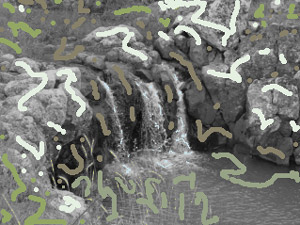
Marked B/W image
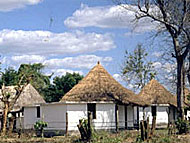
Result
Marked B/W image
Result
The new computer-assisted method has been developed by Dr. Dani Lischinski, Dr. Yair Weiss and graduate student Anat Levin, all researchers at the Hebrew University of Jerusalems Benin School of Computer Science and Engineering. The method is less expensive and time-consuming than earlier colorization methods that were developed in the late 20th century and which helped to convert to color several classic black-and-white motion pictures including Casablanca.
A major difficulty with colorization has been its labor-intensiveness. For example, in order to colorize a still image an artist typically begins by dividing the image into regions, and then proceeds to assign a color to each region. This approach, also known as the segmentation method, is time consuming and requires a great deal of painstaking work on dividing the picture into correct segments. This problem occurs mainly since there are no fully automatic algorithms that can correctly identify fuzzy or complex region boundaries, such as the boundary between a subjects hair and face.
Colorization of movies requires, in addition, tracking regions, as movement occurs across the frames of a particular scene. Again, there have been no fully automatic and reliable region-tracking algorithms for accomplishing this.
After a year of development Dr. Lischinski, Dr. Weiss and Levin created a new interactive colorization process that does not require precise, manual, region detection, nor accurate tracking. The new process is based on the simple premise that nearby pixels in space and time that have similar gray levels should also have similar colors.
When using the newly developed software the user indicates how each region should be colorized by simply scribbling the desired color in the interior of the targeted region, as viewed on a computer screen, instead of tracing its precise boundary. With these user-supplied hints, the software automatically propagates colors to the remainder of the image and from there to subsequent frames of the movie.
This new technique offers a simple, yet surprisingly effective interactive colorization tool that drastically reduces the amount of input required from the user. In addition to colorization of black-and-white images and movies, the technique is also applicable to selective recoloring, an extremely useful tool for refining digital photographs and for achieving special effects. A provisional patent application has been filed for the process.
The new technology was recently presented at the worlds leading conference on computer graphics, held in Los Angeles, where it generated great interest. Yissum, the Hebrew University Technology Transfer Company, is currently in the preliminary stages of negotiating with international companies for the purchase of the technology.