It has been a dramatic day in Israel. Shortly after Prime Minister Ariel Sharon announced that he was quitting the ruling Likud party and heading for an early election at the head of a new centrist party, Hezbollah guerrillas in south Lebanon launched one of their heaviest attacks in years. Sharon has held a news conference spelling out why he has quit the Likud and how he views contacts with the Palestinians.
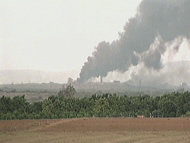
From south Lebanon, Hizballah gunners have launched their fiercest artillery barrage in years wounding eleven Israelis, two seriously. Hizballah first attacked with Katyusha rockets and mortars in the Mount Dov or Shaba Farms area. Israeli artillery and aircraft went into action hitting the Hizballah firing positions inside south Lebanon. The artillery exchange then spilled over along most of the Israeli-Lebanese frontier. In one incident, Hizballah drove into a divided village on motorcycles firing automatic weapons and attempting to kidnap Israeli soldiers. Three or four of the gunmen were killed in the encounter. In another raid two more Hizballah members were reportedly killed. Israeli civilians along the Lebanese frontier were ordered into bomb shelters as the shelling continued.
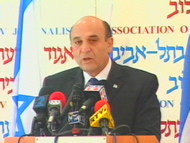
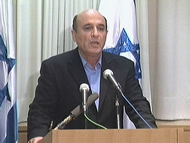
Defense Minister Shaul Mofaz charged Syria and Iran with responsibility for the Hizballah offensive. At a Tel Aviv news conference, Mofaz accused Syria of trying to divert attention from the international enquiry into its involvement in the assassination of former Lebanese Prime Minister Rafik Hariri. Iran is known to be inciting Hizballah into stepping up its attacks on Israel. For its part, Hizballah is also under pressure by the Lebanese government and the U.N. to disarm and stop attacking Israel. As expected, Hizballah accused Israel of initiating the flare-up. At the news conference, Defense Minister Mofaz revealed that he has decided not to join Prime Minister Sharon’s new party. Mofaz declared that he is remaining in the Likud and will enter the race for new party leader.
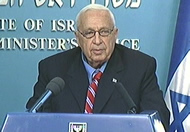
Meanwhile, in Jerusalem Prime Minister Ariel held a news conference to tell the Israeli people why he has quit the Likud and will lead a new party into an early election expected in March. Sharon said: ‘I was not elected by the Israeli public to simply warm the prime minister’s seat’. The Prime Minister said he could have lead the Likud to another election victory but ‘it would have been a waste of time’. He explained the internal opposition he faced inside the Likud prevented him from implementing vital goals such as seeking peace while fighting terrorism and if possible to advance to the Roadmap. His unilateral disengagement had provided Israel with a rare opportunity to move forward and he was determined not to miss it; for his part he was ready to make painful concessions. At the same time he would not carry out any more unilateral withdrawals on the West Bank. The only plan on the table is and will be the Roadmap but it could be implemented only if the Palestinians implemented fully their commitment such as disarming the terrorists. There was no time frame for the negotiations which could advance only after each stage was fully implemented. And Sharon added in the final phase, not all the Israeli settlements on the West Bank would remain under Israeli control. In answer to a question, the Prime Minister also said the illegal Israeli outposts on the West Bank would be dealt with. He did not elaborate. Despite taking what is obviously a big gamble by quitting the Likud, Sharon was in a good mood, smiling and often chuckling as he answered reporters’ questions. He said: ‘Yes, I’m pushing 78 but that’s good isn’t it with all my experience’. Sharon left no doubt that he has the energy and the will to take on all comers in what will likely be one of the most dramatic and fateful election campaigns in the history of the Jewish state.